30 April 2016

Public opinion supplied to ASIO for free

Australia's secret government surveillance organisation ASIO (Australian Security Intelligence Organisation) employs people to gauge the masses.

As we should all be aware that electronic surveillance has been carried out since day dot on the government carriageway called the 'internet'. 

There are many other ways that the 'enemies of the state' are monitored, and one of those methods is 'old school'.

This involves the 'foot soldiers' being able to blend in with the masses.

This is far from 'conspiracy theories' but rather from accurate sources.

One task of the 'foot soldier' could be is to go out into the war zone community and document general consensus of the plebs.

One of those tasks could involve the employee sitting down at a cafe, with regards to a specified 'person of interest', or just mingling with the herd populous in order to gauge the political climate of the peasants.

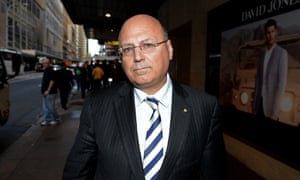
We have obtained a reaction to an article published by The Age publication from the 30th of April 2016.

See illustration of what one of the 'plebs' thinks of Australia's 'executive'.


In this instance the service was provided for free to any government organisation that wishes to use this information to obtain the truth.

28 April 2016

Australia is run by criminals above the law - Arthur Sinodinos will not attend Senate inquiry

Cabinet secretary rules out appearing at inquiry set up by Labor to investigate associated entities, such as the Liberal party’s Free Enterprise Foundation

Cabinet secretary Arthur Sinodinos won’t be attending a special parliamentary inquiry into political donations on Thursday, despite a “demand” from the Senate that he show up to give evidence.

Sinodinos wrote to the committee late Wednesday saying he wouldn’t be attending during the two hours scheduled for him to give evidence on Thursday morning and that the “direction” was “objectionable”.

“It would be inappropriate for me or any minister to appear ... the purported direction ... is without precedent, and violates well established Senate practice,” Sinodinos wrote.
He said the inquiry had a “ludicrously” short time frame and the public could be forgiven for concluding that it was a “stunt”.

As revealed by Guardian Australia, Labor used the special sittings of parliament this month to set up the snap Senate committee to investigate the oversight of associated entities, like the federal Liberal party’s Free Enterprise Foundation, which the New South Wales electoral commission says was used to “wash” property developer donations illegal in that state, at a time when cabinet secretary and senator Arthur Sinodinos was the NSW party’s finance director.

The government said the “demand” set a dangerous precedent and labelled the inquiry, by the Finance and Public Administration References Committee, as a “stunt”.

It then also requested that the inquiry hear from the opposition leader, Bill Shorten, and six other figures involved with a $40,000 political donation Shorten failed to declare for eight years before revealing it in evidence to the royal commission into trade unions.

The committee, on which Labor and the Greens have the numbers, declined.

Other NSW officials have also reportedly declined to give evidence and the chair of the NSW electoral commission, Keith Mason, has written to the committee saying it cannot provide a submission because the issues being discussed are still under investigation by the commission.

That leaves the Australian Electoral Commission as the only organisation actually providing evidence on Thursday.

The federal director of the Liberal Party, Tony Nutt, wrote to the committee saying in the Liberal Party’s view “the current arrangements set out in the electoral act for the funding and disclosure regime in general and for annual returns by parties and other entities ... works adequately” and that it helped to encourage “engagement with the democratic political system by a wide cross section of our society.”

Sinodinos has always said he did not know about the banned donations.

The committee will now report his failure to attend to the Senate, which may vote to refer the issue to the privileges committee.

The royal commission did not make any adverse findings against Shorten. In evidence to the commission he revealed he had failed to declare a political donation of about $40,000 from a labour hire company that he received for the 2007 election campaign. The labour hire company, Unibuilt, had donated money through the AWU that was used to pay $40,000 of the $52,000 salary of Shorten’s campaign director Lance Wilson in February 2007. He declared the donation only a few days before he gave evidence to the royal commission last year when it came to his attention. The donation came at a time when the AWU was negotiating an enterprise agreement with Unibuilt.

Shorten said he didn’t believe Unibuilt was seeking something in return for the donation.

The committee has three Labor members, two Coalition members and one Green.

27 April 2016

1973 - The Birth of Corporate Australia


1973 The Birth of Corporate Australia & The Death of the Commonwealth of Australia.

By Jeremy Britton.
 
The year was 1973: It was the the year that the US ceased its decade-long offensive in Vietnam. The year of the final moon landing. The US dollar devalued by 10% in a single day. The Watergate Scandal was top news. OPEC doubled the price of crude oil, leading to a large fuel crisis. Queen Elizabeth II of England visited Australia’s capital city on a special mission of great importance, and signed a new secret Act into force inside Parliament House (more on that later).

1973 was also the year your money died.


Up until 1966, Australia used pounds (L), shillings (S) and pence (D). Each pound note was inscribed with the words, “Legal Tender, guaranteed by The Crown and the Commonwealth of Australia”.

On February 14th 1966, amidst huge ceremony, the (LSD) pound, shillings and pence were discontinued, and replaced by the Australian dollar and cents. There were ads placed on TV, radio and in newspapers for weeks beforehand announcing the change. People aged 60+ may even remember the musical jingle from TV.

Each new dollar note bore an inscription saying that the note was “Legal Tender throughout the Commonwealth of Australia and the Territories of the Commonwealth”. The notes were all denominated and titled under the heading “Commonwealth of Australia”. Hooray for us!

A few years later, in 1973, with ZERO ceremony, and zero announcements, no TV commercials, the dollar notes were changed again. This time, the notes bore a new inscription, saying that the note was “Legal Tender throughout Australia and its Territories”.

So, what happened to “the Commonwealth”?

First, look up the word “Commonwealth”. It does not mean the Queen, or England. The Commonwealth is the “common” people (you and me) and their “wealth” (gold, silver, real estate, basic property, and the work of your hands, or your labour).

The original (British) pound notes used in Australia prior to 1901 were backed by physical gold, and guaranteed by the reigning monarch of England.

Since 1901, the Australian pound notes were no longer backed by gold, but said to be guaranteed by the Crown, an entity (not a person) who was assumed to be able to exchange the notes for gold, if required.

Australian banknotes from 1901 to 1973 included a guarantee from “the Commonwealth”, which assured the receiver of the note that if they could not exchange the note for gold, then they could be assured that the slave workers of Australia would provide some form of value through giving up their work or property to honour the paper debt.

In 1973, the “common” people and their “wealth” were removed from all Australian currency.
This means that a) the common people are no longer liable for the debts incurred by the government, and b) the common people are no longer able to benefit from the wealth created by the government.
Effectively, you’re on your own.

The government will NOT look after you, they are NOT here to help you and you cannot trust them.
If you think that the government will look after you, please examine closely what governments did to Australian Aboriginals and Native Americans…

OK, so millions of executions and mass theft of land were heinous crimes, and thanks to the overt nature of these offences, we can all look upon them and see that they were “wrong” and should never happen again.

We the people learned lessons, that we should not allow government to slaughter people and steal their possessions. However, the government also learned lessons: if you make your crimes and thefts obvious, people will rise up and overthrow the ruling class. So it is best to keep your crimes hidden, and keep your theft invisible.

The Senate and the House of Representatives of Australia commenced under their own power in 1973. They were not legally voted in and have no constitutional power. (Like a fake cop with a plastic badge and a plastic gun, the only power they have is the power you give them, when you bow down and assume they have authority.)

Their first act was to remove the word “Commonwealth” from the Australian currency. Again, this was unannounced to the public, and millions of people carrying the money in their pockets may not have even noticed.

They then proceeded to remove the word “Commonwealth” from the Corporate Australian system of government and from numerous Statute Laws.

They removed the word “Commonwealth” from the Currency Act (1965-1969), and the Banking Act (1959-1967), and Banking Act Amendments, Acts #116 and #193.

Not content to screw with the money in your pocket, they even messed with the laws regulating how the money was made and lent, and to whom it was repayable.

Even the Act that was formed to help people to understand the other Australian Acts (the “Acts Interpretation Act” (1901-1966)) was changed in 1973.

Prior to 1973, the Act read, “Be it enacted by the King’s Most Excellent Majesty, the Senate and the House of Representatives of the Commonwealth of Australia…”

The canny criminals altered this for the new act to read, “Be it enacted by the Queen, the Senate and the House of Representatives of Australia…”

As you can see, they removed the word “Commonwealth” again, meaning that theirs is a separate and different entity. They also removed the “Most Excellent Majesty” clause, separating a natural-born person of the royal family, and a royal position. To understand why this is important, try to personally sue Elizabeth Saxe-Coburg-Gotha, the Queen of England (a naturally-born person), as opposed to sueing the “Crown” (a separate legal entity).

Understandably, Mrs Saxe-Coburg-Gotha living in Buckingham Palace would not wish to be personally liable for any wrongdoings of her Church of England, her British empire, its employees, agents, subsidiary countries, nor for any debts incurred in her name. It is far easier and more sensible to have a separate entity, in the same way as a builder or a doctor will operate their business under a company, so if somebody dies, or a house falls down, lawyers will sue the company, and not seize the assets of the individual person.

Speaking of companies and corporate entities, it may interest you to know that there was a corporation known as “The Commonwealth of Australia”. It was registered with the Securities Exchange Commission (SEC) in Washington DC in 1934, just after the Great Depression.

“The Commonwealth of Australia” was registered as a “sovereign nation” (which is legally NOT the same as a sovereign country).

It seems that the original country/government/commonwealth/organisation known as “Australia” may have declared itself bankrupt sometime during the period from 1929 to 1934, during the Great Depression. There were no “GFC-like” corporate bailouts back then, and you would either have to go bankrupt or borrow heavily from another nation, thus making yourself subservient to them.

Just as a billionaire would close down a troubled company and start a new one, the ruling class of Australia registered a new company with a similar name in 1934, to continue operations whilst not having to settle its old debts.

Interestingly, it seems that the new “Commonwealth of Australia”, registered in Washington DC in 1934 may have been set up by the creditors of the old Australia…

That is, the new company/nation was registered by the people to whom the old “Australia” owed money to: the United Nations (UN), the International Monetary Fund (IMF), the “Crown” (corporate England) and several international banksters (Rothschild central banks).

It would appear that an arrangement was made by those lending the money, to allow Australia to operate under a new name, so long as it agreed to pay back a few pennies in the dollar, rather than writing off the entire debt, running away and changing its name to Austrabekistan…

The corporation known as the “Commonwealth of Australia” then existed from 1934 to 1973, when the new pirates came in and registered a new corporate identity, simply known as “Australia”.
The entity known as “Australia” was also registered in 1973 at the SEC in Washington DC, alongside a secondary level of debt reconstruction and reorganization (not a bankruptcy, more like a Chapter 11, or a Scheme of Arrangement).

After the fictitious entity known as “Australia” was registered in Washington DC, they also registered new entities, including the “Parliament of Australia”, and the “Queen of Australia”. Like the building company, these organisations are also corporate structures made of paper, not real people who can be sued, imprisoned nor held accountable for their actions.

Government publications in 1971 were called “The Acts of the Parliament of the Commonwealth of Australia”. Government publications in 1972 were called “The Acts of the Parliament of the Commonwealth of Australia”. Lo and behold, in 1973, government publications were called “The Acts of the Parliament of the Australian Parliament” (with the word “Commonwealth” removed).
You can see the PDF with the three years here: http://truth-now.net/wp-content/uploads/Parliament-of-the-Commonwealth-vs-Australia.pdf

1973 — the year that Australia was sold to the USA, the banksters and the IMF.

Sceptics are now tut-tutting and looking for tinfoil hats. More open-minded people will click on the next link and see the SEC filing on the US government website.http://www.sec.gov/cgi-bin/browse-edgar?company=Commonwealth+of+Australia&CIK&filenum&State&SIC&owner=include&action=getcompany

There are hundreds of pages of documents and filings on a US government website: all notarised and all verifiable.

It is clear that the nation known as Australia is a registered corporate identity in the USA. Does the USA have a reciprocal registration with ASIC in Australia? No. Because the USA is not owned by, nor indebted to, nor does it owe anything to, Australia. Think about that.

If sceptics care to check the SEC filings to see if the USA registers its other trading partners, or those with whom it does business, you will find that the biggest trading partners of the USA are not listed at the SEC nor are other countries registered in Washington… because these other countries are not owned by, nor indebted to, the USA.Think about that for a minute.

If you believe that Australia is a registered corporate entity in Washington DC (and according to the US government website it is), you may see why your freedom is being eroded, or why Australia tends to blindly follow the USA.

You may open your eyes to see that Australia has to file reports to the US government every year (it does, and you can see them on the above SEC website).

Even the famous Australian Coat of Arms is a business trademark, and registered as a business trademark in the USA.
 
http://tsdr.uspto.gov/#caseNumber=89000535&caseType=SERIAL_NO&searchType=statusSearch

Australia files annual reports to the SEC in the USA (just as any business would report its earnings to a tax office, or to a creditor, or to someone to whom it owes money).

This may help you to understand why Australia follows the USA into every war, including the invasion in Iraq, which was illegal, and based on falsified data about fictitious weapons of mass destruction (WMD’s), which did not exist and were never found.

The country of Australia is a large landmass located in South-East Asia. It was founded by the British, uses British law, and a British monarch as its head. Its largest trading partners are Asians in China and Indonesia, yet Australia holds so much affiliation with the USA, and so much (baseless) loyalty to the USA, so much interest in the politics of the USA, that one could almost consider the land of Australia to be the fifty-first state of the USA. Why is that?

Australia is a US corporation, and can be treated like a company, not like a Motherland. Its so-called government “administrates” and is essentially legally powerless, unless you acquiesce,  sign an agreement with them, or bow down to their false authority.

You can see a two-minute clip about how an ordinary bloke, who wanted to import an American car to Australia, ended up taking on the Australian government and challenging them to prove their authenticity and authority, right here:

https://youtu.be/EeYQNq7znH4

The full one-hour version of his documentary can be found at http://truth-now.net/

Not only is Australia a corporation registered in the USA, but the so-called “Australian government” is an administrator who has been appointed to administrate a bankrupt country. 

When you understand that the government has been defrauding you for many years, you may just change your mind about paying council rates, income tax, parking fines, failure to vote penalties and so on.

If a company whom you do not recognise sends you an invoice; an invoice which you did not agree to pay, do you have to pay it?

The majority of people pay the fines (*invoices*) without question, and so the illegal government can keep their money, keep their authority and maintain their power. (I’m pretty sure that Al Capone ran a similar racket in Chicago, called “pay me or I’ll bust you up”. Like Capone’s money-grab, it would seem that the seated Australian government also has no legal rights to your cash; they only get it if you hand it over without a fight and if you pay up without asking questions.)

 realnewsaustralia.com 24 Apr 2016

24 April 2016

Australian 'charities' defrauding millions annually from taxpayers

Australian charities are businesses where 'money for mates' deals are setup, where up 95% of the monies obtained can be dissolved into the running of the business before even one cent ( technically not possible in physical terms) makes it to the actual cause.

WE have obtained figures from various charities which shows a consistent average of 90% of funds going into 'administration' costs.

The CEO of the 'charity' is on a high salary together with many other benefits, like using the company's motor vehicle for private use, extra curricular activities as a tax 'dodge'.

They then hire their 'mates' on a decent salary in order to 'administer' the organisaton, where it all may look legitimate on paper, but once an audit is done, it's a 'money for mates' scam, all at the expense of the Australian 'mums and dads' taxpayers.

When purchasing equipment they hire their 'mates' services or obtain products which are grossly inflated, in easy unscruitinised purchases effectively defrauding the 'mums and dads' yet again.

This is only one minute example of being 'busted', but it is with little doubt that this practice will go on uncurbed, as this also implicates people in government, who are also 'supporting' this fraud.

It is very doubtful that a Royal Commission will ever see the light of day on this matter.

See article from 24 Apr 2016 by The Age of the headline:

Anzac charity in firing line

We’re calling it: Coke is dying


Diet Coke: just another of Taylor Swift’s unfortunate exes.
Emma Reynolds, news.com.au

THE love affair is over. After so many hot summer days together, nights out, nights in and cosy Christmases, we’re moving on.
Coca-Cola is dead, and no one is sorry.

The iconic brand has tried everything to keep that fizz going. As it realised people were turning on its signature teeth-rotting drink, it created diet choices.

When the healthy eating movement decided sugarfree sodas were almost as bad, it came up with Coca-Cola Life, made with natural sweetener stevia.

It unveiled new packaging, “unifying” its labelling so that all of its drinks feature a red disc like the original Coke, so fans feel more like they’re drinking The Real Thing.

Tragically, what the brand just doesn’t understand is that’s precisely what we’re no longer interested in.

It’s not you, Coke, it’s us.

There was no fizz in Coca-Cola Life.
There was no fizz in Coca-Cola Life.Source:News Corp Australia

IT’S GONE FLAT

This week, Coca-Cola’s profit slipped in the first quarter as the world’s biggest beverage maker was squeezed by weakening foreign currencies and costs around transforming its North American operations.

Worst of all, soda volumes were flat, with its original drink in decline and a lack of consumer demand in Europe and Japan.

Net income for the quarter ending April 1 was $1.9 billion, down 4.8 per cent year-on-year. Revenues fell four per cent to $13.3 billion.

“They’re banking growth on third world countries, and that’s tragic,” Geoff Dart, of retail consultancy firm DGC Advisory, told news.com.au. “When you’ve exhausted the Western market and you turn to countries like Africa ... There are better choices third world countries could make regarding nutrition. Water would be a far better resource.”

With celebrities like chef Jamie Oliver calling for a sugar tax, and anti-sugar campaigners Sarah Wilson (I Quit Sugar) and Damon Gameau (That Sugar Film) speaking out against the sweet stuff, our former favourite needs to wake up and smell the sucrose.

“There’s a global movement towards health,” said Mr Dart. “McDonald’s is struggling as well. It’s still associated with hamburgers and greasy food. Coke has been going for 100 years, McDonald’s at least 80. It’s hard to change consumers’ perceptions.”

Just as Coca-Cola made that painful discovery with Coke Zero, Diet Coke and Coke Life, there’s only so much the fast food chain’s gourmet “create your own” range can do to alter that image.
We’re not lovin’ it.

Repackaging couldn’t stop sales from going flat. Picture: The Coca-Cola Company via AP
Repackaging couldn’t stop sales from going flat. Picture: The Coca-Cola Company via APSource:AP

STOP BEING YOU

The way Mr Dart sees it, Coke needs to stop being Coke.

“I don’t think the answer is using the Coke brand,” he said. “To evolve the brand would be extremely difficult.

“You can’t have all your eggs in one basket. Being innovative is not just about having a sub-brand like Diet Coke.”

While Coca-Cola owns various other brands, it hasn’t had large-scale success with products that aren’t carbonated drinks. It could pour far more energy into developing other popular items in the refreshment arena - mineral water, mints, juices.

Alternatively, it could be a brand in its early stages that has already established a consumer following.
“Nestle have done it successfully,” said Mr Dart. “They’ve changed the perception around how healthy they are.”

Pepsico have achieved it too, growing into a far bigger brand than Coca-Cola.

CEO Muhtar Kent must be getting in a froth.
CEO Muhtar Kent must be getting in a froth.Source:AFP

Happier times.
Happier times.Source:AFP

THE MAKEOVER

With more choices than ever, customers are increasingly discerning about the brands they choose.
The healthy trend has come hand-in-hand with a movement towards boutique, niche products, which give the illusion of being better for you, even if they aren’t.

Mr Dart gives the example of beer. While low-carb versions of regular beers haven’t been a huge success, craft beers are everywhere.

The same applies to cider. We love to see labels mentioning organic apples — it sounds healthier — and the drink has seen huge growth in China.

“They just need to reinvent themselves and build a strategy around another brand,” said Mr Dart. “They need a strategic direction and it needs to happen at board level.”

Can we still work things out with Coca-Cola? Or will we be watching the bubbles as it sinks without a trace?

news.com.au 23 Apr 2016

You buy this 'poison' you deserve every aliment you get!

 Taylor Swift promoting Coke - Just another corporate whore promoting poison for a price.

21 April 2016

Experts warn of fraud, lost cards and ‘card clash’ as contactless payments for travel is rolled out

IT’S been heralded as an Australian first making life easier for the travelling public. 

But fraud experts have warned commuters that the price to pay for being able to tap on and off with their bank cards, rather than smartcards like Opal, could be high.

While transport bosses have warned that there’s the real risk passengers could be charged twice if they tap on wrong in future. A spike in lost cards is also, well, on the cards.

On Monday, NSW Transport Minister Andrew Constance, said a contactless payment trial would begin in 2017 which could see people ditching their Opal cards forever.

Similar to smartcards, passengers will tap on at the barriers but with their debit or credit cards, with the fare deducted directly from their bank account. There will be no need to top up ever again.

“Contactless payment with credit and debit cards would offer customers another easy to use and convenient option for travelling,” Mr Constance said.

The campaign in London to warn customers not to place their bank cards and smart cards in the same place. Picture: Supplied.
The campaign in London to warn customers not to place their bank cards and smart cards in the same place. Picture: Supplied.Source:Supplied

CARD CLASH

London is a pioneer of smartcard systems, introducing the Oyster card in 2003. In 2014, Londoners began tapping on and off with bank cards with 25 per cent of journeys, or more than a million each day, now paid for via debit and credit cards.

However, the transition has not been without its problems and has even led to a whole new word entering the lexicon of Londoners — “card clash”.

Speaking in Sydney on Monday at the Future Transport Summit, Transport for London’s Director of Customer Experience, Shashi Verma, said the city’s transport authority had to educate customers to not fall victim to card clash.

“We had to warn customers to keep their debit card separate from their Oyster cards because, if you don’t do that, there is the slight possibility that you might be charged on the wrong card,” he said.

The problem arises because if a passenger keeps all their cards together, and places their whole wallet or purse above the reader, they could tap on with one card and then tap off with another.

Alternatively, people with multiple bank cards have found the fare deducted from the wrong one.

In the August 2014 run up to the official launch of contactless payments in London it was estimated some 2000 transactions every day were occurring on bank cards without the knowledge of travellers who thought they were using their Oyster cards, reported the London Evening Standard.

In some cases, Londoners have even taking to wrapping the card they don’t want to use in tin foil to prevent it from being accidentally charged.

Mr Verma said it was important to be on the front foot to avoid angry commuters and London’s card clash campaign had “worked out very successfully”.

Opal card turnstiles at Gosford that will soon accept bank cards. Picture: Peter Clark
Opal card turnstiles at Gosford that will soon accept bank cards. Picture: Peter ClarkSource:News Corp Australia

LOST CARDS

But don’t tell that to the public transport users who, in an attempt to avoid card clash, then lost their cards altogether.

In February 2015, it was revealed more than 2000 lost smart and bank cards were handed into London Underground and rail stations every month following the introduction of contactless payments.

The Mirror reported that in the entire year before contactless cards only one month had seen more than 2000 cards handed in and much of the time the figure was less than 1000.

It appeared, that in the panic to tap on with the right piece of plastic, Londoners were doing a quick card shuffle before they reached the barriers and scattering the whole lot across the station floor losing some in the process.

But a far more concerning worry is fraud.

CEO of FraudWatch International, Trent Youl, told news.com.au the extra handling of bank cards could leave people vulnerable.

“Since contactless payments have become the norm, there has been an increase in physical credit card theft.

“If public transport, which is used by so many people, is added to the uses for contactless payments, one might expect that physical credit card theft may continue to rise.”

Matt Cole, President of Cubic Transportation Systems, which runs NSW’s Opal ticketing system.

Matt Cole, President of Cubic Transportation Systems, which runs NSW’s Opal ticketing system.Source:News Corp Australia

HACKED

Even keeping hold of their cards might not be enough, he said, if personal bank data is hacked from transport databases.

“The consumer can do nothing to prevent this from occurring, and just using this type of system once will ensure their credit card details are stored within a database for an unknown period of time.

“It is highly likely that a holder of a large amount of consumer’s credit card details will be a major target for online attack, and in this day and age, one can almost assume that this type of database will be breached at some point,” said Mr Youl.

The President of US based Cubic Transportation Systems, Matt Cole, which runs the Opal system, said Australians were already using their bank cards to tap on and off. In fact, data from London shows Australian issued bank cards are second only to UK cards when it comes to entering the Underground.

He disagreed that using bank cards led to a new security concerns.

“There’s certain security measures you have to go through to provide protection to a system that accepts credit and debit cards.

“But that’s no different to a smart card system where you can add value to a card like an Opal, so much of those security requirements already exist,” said Mr Cole.

“Essentially what you’re doing is changing the location of that transaction from the web or vending machine to the turnstile itself.”

A spokeswoman for Transport for NSW told news.com.au that commuters would continue to be able to choose between Opal or bank cards and a contactless rollout would include a “comprehensive customer information campaign” on the use of credit or debit cards when travelling.

“A lot of critical work needs to be undertaken in the first stage of this project such as finalising partnerships, working with the finance and contactless payments sector, developing the software and then in 2017, undertaking a customer trial,” she said.

“Transport for NSW takes data security very seriously and will work with the finance and contactless payments sectors to implement rigorous industry standards on system security.”

benedict.brook@news.com.au

It is also important to note the video from MuthBusters who were banned from talking about RFID chip used by VISA and American Express.


See video at:
https://www.youtube.com/watch?v=cs4I-hURT7A

20 April 2016

Mass surveillance via transport system


What the majority of the general populous does not comprehend is that in 'law', Australia is still a penal colony of good ol' mother England.

Sure you can be a millionaire, enjoy the tropics of the Whitsundays, be a mining magnate and send your tax free profits to occupied land overseas to build compounds for illegal settlers, be a billionaire, or even (the best part about it) leave this colony also known as a continent.

Once you're on this continent though you're considered a criminal at law that has to prove one's innocence despite what you are told to believe, being the catch phrase "innocent until proven guilty".

Australian law follows Roman law, where strict and absolute liability is in force.

Got any doubts?

Just look at you local court list where a matter of an alleged parking fine or speeding fine has occurred it is listed as a criminal matter.

But alas that is a digression.

The 'authorities' on this prison isle are about mass surveillance and control of movements of the general populous, as you do in a penal colony.

In older styles of trans-'port' (between ports) travel registration, the likes of paper tickets, the movements of the plebs was relatively anonymous. 

Irrespective of digital surveillance technology implementation, the movements are still relatively anonymous through the newer generation of ticketing systems, like Opal in NSW or Myki in Victoria, where the traveler could purchase credits anonymously, meaning the 'name' was not linked to the card.

So in order to log the pleb's travels, the authorities made a nice and simple package marketing ease of use, or what ever other advantages to use one's credit card.

Many people still today do not use credit cards.

Is this a way of the 'authorities' forcing the plebs to use technology that logs their travels?

As we should know credit companies give out their database to whoever gives them the required monies. It's not rocket medicine.

REMEMBER : THIS IS A "CONSPIRACY THEORY 
and all this technology is for YOUR benefit and  ease of use.

See article from 18 April 2016 from news.com.au for the headline:

NSW Government to trial using bank cards to tap on and off transport system

Soon you’ll be able to catch a train or bus with your bank card. Picture: Peter Clark

IT SOUNDS innocuous enough but an announcement on Monday of a trial using bank cards to tap on and off Sydney’s transport system could lead smartcards — such as Opal, Myki and Go — to become as quaint and old fashioned as cheques, just a few years after they were introduced.

As heralded by news.com.au in December, from 2017 Transport for NSW will allow passengers to use contactless credit and debit cards to pay for public transport meaning they can ditch their opal cards all together.

Similar to smartcards, passengers will tap on at the barriers with their debit card but the fare will be deducted directly from their bank account meaning there will be no need to top up ever again.

However, commuters outside of NSW will have a long wait for the new technology with smartcards likely to hang around until near the end of the decade in Melbourne, Brisbane and other major cities.

NSW Transport Minister Andrew Constance, who made the announcement at the Future Transport Summit in Sydney on Monday morning, said the trial was an Australian first.

“Only a few major mass transit systems, similar in scale and complexity to Sydney’s, have introduced contactless payments,” Mr Constance said.

“Contactless payment with credit and debit cards would offer customers another easy to use and convenient option for travelling.”

The first trials will take place in 2017 after new software has been installed in the current system — likely to be a not inexpensive process.

The current Opal card system cost $1.2 billion to install and followed a tortured earlier attempt at a smartcard, called Tcard, which was eventually abandoned.

In London, where contactless payments were introduced in 2014, more than 25 per cent of passengers — or more than a million people a day — have given up their smartcards for their credit card.

Is the Myki system able to be converted to allow using bank cards?

In December, the head of global payments giant MasterCard’s ‘transit centre of excellence’, Will Judge, who was previously involved in London’s Oyster smartcard, told news.com.au, NSW was in the box seat when it came to the next leap in ticket technology.

“We believe that Transport for NSW took some wise decisions in equipment they purchased that seemed to suggest they had an eye to the future,” said Mr Judge.

Transport systems needed to be easy to use or people will choose to drive instead, he said.

“How can you stop the thought process of someone going, ‘I’m in a hurry, I’d like to get on that bus, can I get a ticket in that shop over there and will the bus still be there when I get back?’ to a much more spontaneous, ‘Great there’s a bus, I’ve got something in my pocket I can pay with, I just get on, tap and ride it’.”

Using bank cards has another benefit — the card you use to tap on in Sydney you can use to tap off in London saving people from a wallet full of different smartcards.

However, those outside of the emerald city may have a long wait to get their own trial.

Neither south east Queensland’s $140 million Go Card system or Public Transport Victoria’s [PTV] bespoke $1.3 billion Myki system, both of which went live in 2008, are unlikely to be able to make the change any time soon.

The technology they run off was introduced years earlier than Opal and, as such, is significantly older.

A spokesman for PTV told news.com.au they were in the midst of a tender process to contract a provider to operate the existing Myki system.

“Our main focus is the continuity of ticketing services but the chosen vendor must have the capability to identify and deliver future technologies that support service improvements and revenue growth,” the spokesman said.

News.com.au has contacted Queensland’s transport authority to ask when a bank card trial, similar to Sydney, was likely to happen.

Last month, news.com.au revealed that NSW transport bosses were working on a single-use Opal card that will see single and return paper ticket finally consigned to the history books.

Despite Monday’s announcement being an Australian first, in London passengers are beginning to pay for travel with their mobile phones, banishing their bank cards altogether.
Comments on this story

19 April 2016

Australia to play leading role in new world order

Lord Howell pushes for strengthening of Commonwealth, tips Australia to play leading role in new world order.

Could Australia take a lead role in the new world order? Picture: istock
CHARLES MIRANDA in LondonNews Corp Australia Network
 
AUSTRALIA is in a unique position to take a lead in the emerging new world order with its wealth, relative political stability and ‘old networks’ propelling it to strategic strength in an unsettled world.
That’s the view of senior House of Lords figure and one-time Minister of State (Foreign and Commonwealth Office) Lord Howell who has proposed a strengthening of the Commonwealth to reflect changing times.

But his belief Australia could have a leading role to play in the league of nations comes amid a debate in the British parliament on new visa laws set to see low earning Australians deported and tougher restrictions to stymie new migrants wanting to come into the UK.

Speaking on the eve of Commonwealth Day on Monday, where the Queen will lead celebrations at Westminster Abbey, Lord Howell said in an unsettled world the league of 53 nations had added importance particularly as a bloc to fight jihadism.

Australia becoming a republic has been a hot topic of discussion in recent months, but staying with the Queen and the Commonwealth. Picture: ADavidson/GoffPhotos.com.
Australia becoming a republic has been a hot topic of discussion in recent months, but staying with the Queen and the Commonwealth. Picture: ADavidson/GoffPhotos.com.Source:Picture Media

He said it should no longer be considered a “club of past affairs” but rather an ideal platform for future, on issues such as trade, security and tackling jihad, particularly in countries like Nigeria.

But he said Australia was in the box seat as a rising power in Asia to drive that influence and expansion that could only aid the UK doing business in that region.

“My sense is Australia feels the value of the growing Commonwealth network as never before,” he told a Commonwealth briefing at Buckingham Palace yesterday.

“The issue is how Australia fits into the rising new trade patterns of the world which now favours the Commonwealth.

“A place like Perth in Western Australia looking at the Indian Ocean is really becoming something of the centre of the world, rather than an outside part of the world, as is the other side of the country facing the southern Pacific as well.”

He added: “Its no longer the Anglocentric system of the history, although its true the Queen as head of it is here, this is a network and Australia is a key part of it.”

His words came as in the House of Commons, MPs were lining up to condemn plans by the Government to next month introduce the first of a tranche of new laws designed to reduce migrant intake from countries outside the EU.

Proposed laws would see Australians on low wages in the UK sent home. Picture: istock
Proposed laws would see Australians on low wages in the UK sent home. Picture: istockSource:Supplied

An e-petition of more than 100,000 signatures from the public prompted the debate during the week condemning moves for potential new skilled migrants to have to earn 30,000 pounds (about AUD $60,000) minimum in the UK to migrate.

The average salary in the UK is 26,500 pounds and the Government wants to use higher salary thresholds to prioritise higher value, skilled migrants within the Tier 2 visa route.

Some MPs who spoke to the bill said plans to deport those earning less was “crude” and “ludicrous” and had caused confusion and uncertainty and could create a skills shortage in the UK.

Under new rules companies would also have to pay a surcharge to employ a non-EU migrant. The government is yet to speak on the bill.

 news.com.au 11 Mar 2016

Maybe  model for Australia to send back low paid migrants back to where they came from.

16 April 2016

Hansard altered - Can you really trust the Australian government?

The Australian government has been busted altering an official government record called a 'hansard'.

When referring to Acts, Bills etc and the rule of law, parliamentary documents called hansards are also referred to.

Since it has come out into the public arena that in this instance the hansard was altered, in relation to Barnaby Joyce's activities, what assurance have the people of Australia got that the hansards are true and correct with respect to the many other Acts passed through parliament.

The short answer none.

Now what 'should' happen is the people responsible to be criminally charged, but anyone who knows anything about the law will know nothing will happen, as these people are above the law.

See excerpt from the Herald Sun article of 16 April 2016: