A look into Corporate fraud in Australia, Stranglehold of Monopolies, Telecom's Oppression, Biased Law System, Corporate influence in politics, Industrial Relations disadvantaging workers, Outsourcing Australian Jobs, Offshore Banking, Petrochemical company domination, Invisibly Visible.
It's not what you see, it's what goes on behind the scenes. Australia, the warrantless colony.
Note: Site has more info in desktop mode or 'web version' as seen at bottom of page, when on smartphone.
COMMONWEALTH OF AUSTRALIA (ABN: 122 104 616)
Australia's Prime Minister (CEO) Tony Abbott : "Australia is Open for Business"
Social Security is a polarising topic
for many Australians at the best of times, where these days it can be
more contentious.
Once it was called the Department of
Social Security, then Centrelink and now Services Australia.
What's in an name change, right?
Well, a lot more than what people are
led to believe, but that's another topic altogether.
We've obtained information from within,
with regards as to what the #ScottyFromMarketing administration is
planning to enact in approximately 5 months from now, that being
August 2022.
Many people should be aware that in pop
culture, the (United States) constitution is mentioned or rather
emphasised as lot, when it comes to the actions of authorities
against the citizen population.
In Australia, the story could not be
more different, where even if one actually refers to the legal
founding document of the colony Australia, then one gets ridiculed by
e.g. police, or even other administration staff.
People should be aware now of the
'tricks', enticements, blackmail and most importantly unlawful
'requests' used on persons in order for them to succumb to a medical
service.
There's No Jab No Play, No Jab No Job,
No Jab No Pay catch phrases that people are being forced into.
What the federal government is planning
to employ in August is that a person will not receive social welfare
payments unless that person has succumbed to a particular medical
service.
There are a fair few problems with
that.
One is that Section 51 (xxiiA) of that
'law' called the Constitution, forbids the Australian Government from
providing medical and dental services in such a way as to oblige
persons to accept those services.
The so called medical service that one
must accept cannot be called what it is, as it does not provide the
functions of what it's referred to as.
Proof does not exist that the
follow up medical services that have been cleverly labelled as 'up to
date' are factually effective.
Social modelling shows that when the
safety net of welfare is taken away from the general population,
criminal activity increases.
Therefore if/when this is enacted the people in government want more criminal activity to occur.
The authorities e.g. the police within
the continent, in Western Australia and across the Tasman, in New
Zealand are challenging the so called mandates and are having them
nullified, whereas the general population must succumb to that unlawful request.
The general population do not
comprehend the reality they live in on this continent.
While people are told that they live in
a 'democracy' here, they certainly do not live in a 'free' society,
as alleged elsewhere.
The actions are what's important, as
opposed to what is being 'advertised' to you.
Australia, still being a colony
enforces 'penal colony policies' where now during the events of the
past two years have put the government into a totalitarian régime.
The very thing that the police have
fought for, the general population is being beaten and assaulted for.
Grandmother being assaulted by Victoria Police during a peaceful Melbourne march.
The FBI appears to have a tool that can access Signal messages, even if a device is locked. (Photo Illustration by Rafael Henrique/SOPA Images/LightRocket via Getty Images) SOPA Images/LightRocket via Getty Images
Signal has become the de facto king of secure messaging apps of late,
stealing users from WhatsApp and gathering millions of others looking
for private forms of communication. That means the police and
governments will be wanting, more than ever, to ensure they have
forensic techniques to access Signal messages. Court documents obtained
by Forbes not only attest to that desire, but indicate the FBI
has a way of accessing Signal texts even if they’re behind the
lockscreen of an iPhone.
The clues came via Seamus Hughes at the Program on Extremism at the George Washington University in court documentscontaining screenshots
of Signal messages between men accused, in 2020, of running a gun
trafficking operation in New York. (The suspects have not yet entered a
plea and remain innocent until proven guilty). In the Signal chats
obtained from one of their phones, they discuss not just weapons trades
but attempted murder too, according to documents filed by the Justice
Department. There’s also some metadata in the screenshots, which
indicates not only that Signal had been decrypted on the phone, but that
the extraction was done in “partial AFU.” That latter acronym stands
for “after first unlock” and describes an iPhone in a certain state: an
iPhone that is locked but that has been unlocked once and not turned
off. An iPhone in this state is more susceptible to having data inside
extracted because encryption keys are stored in memory. Any hackers or
hacking devices with the right iPhone vulnerabilities could then piece
together keys and start unlocking private data inside the device.
Signal messages accessed in an investigation into a gun trafficking scheme, from a government filing in the case. Metadata between the messages indicates the phone was locked. Screenshot from Department of Justice file
For police to access private Signal messages from an iPhone, there
are some other caveats besides a device needing to be in AFU mode. The
iPhone in question appears to be either an iPhone 11 (whether Pro or
Max) or a second generation iPhone SE. It’s unclear if the police can
access private data on an iPhone 12. It’s also not clear what software
version was on the device. Newer iOS models may have better security.
Apple declined to comment, but pointed Forbes to its response to previous research regarding searches of iPhones in AFU mode, in which it noted they required physical access and were costly to do.
A Signal spokesperson said: “If someone is in physical possession of a
device and can exploit an unpatched Apple or Google operating system
vulnerability in order to partially or fully bypass the lock screen on
Android or iOS, they can then interact with the device as though they
are its owner.
“Keeping devices up-to-date and choosing a strong lock screen
passcode can help protect information if a device is lost or stolen.”
Counsel for the defendant in the New York case didn’t respond to messages. The Justice Department said it couldn’t comment.
GrayKey vs. Cellebrite
Forensic exploitation of devices affects any encrypted communications
app, from WhatsApp to Wickr, not just Signal. What is apparent is that
the government has a tool that can bypass encryption to get into what
most people would assume are private messages. The question remains:
What is that tool? It’s likely to be one of two popular iPhone forensics
tools used by the FBI: the GrayKey or the Cellebrite UFED.
GrayKey, a tool created by Atlanta-based startup Grayshift, has been
an increasingly popular choice for the FBI. The agency has spent
hundreds of thousands of dollars on acquiring the devices, which start
in price from $9,995. WhenForbes obtained a leaked recording of Grayshift CEO David Miles talking in mid-2019, he said that his company’s tech could get “almost everything” on an iPhone in AFU mode.
Vladimir Katalov, founder of Russian forensics company ElcomSoft,
said he believed GrayKey was the tool in use in the New York case. “It
uses some very advanced approach using hardware vulnerabilities,” he
hypothesized. Grayshift hadn’t responded to a request for comment at the
time of publication.
Cellebrite, an established Israeli forensics tech provider, has long
served American law enforcement, as well as global police agencies. A
spokesperson said it was Cellebrite policy “not to comment on specific
customers or uses of our technology,” but added that “law enforcement
agencies are seeing a rapid rise in the adoption of highly encrypted
apps like Signal by criminals who wish to communicate, send attachments
and make illegal deals they want to keep discrete and out of sight from
law enforcement.”
In December, Cellebrite indicated
it had developed “advanced techniques” to bypass Signal encryption,
though Signal issued a statement lambasting not just the company but
media reports that had repeated Cellebrite’s claims. In a blog post, Signal said all Cellebrite had done was “parse Signal on an Android device they physically have with the screen unlocked.
“This is a situation where someone is holding an unlocked phone in
their hands and could simply open the app to look at the messages in it.
Their post was about doing the same thing programmatically (which is
equally simple).”
When Signal cofounder Moxie Marlinspike commented on the Cellebrite
claims in December, he called it “amateur hour.” Whatever tools the FBI
used in the New York case, they’re far from amateur.
Apple and Google’s COVID-19 Exposure Notification API: Questions and Answers
Apple and Google are undertaking an unprecedented team effort to build a system for Androids and iPhones to interoperate in the name of technology-assisted COVID-19 contact tracing.
The companies’ plan is part of a torrent of proposals to use Bluetooth signal strength to enhance manual contact tracing with proximity-based mobile apps.
As Apple and Google are an effective duopoly in the mobile operating
system space, their plan carries special weight. Apple and Google’s tech
would be largely decentralized, keeping most of the data on users’
phones and away from central databases. This kind of app has some
unavoidable privacy tradeoffs, as we’ll discuss below, and Apple and
Google could do more to prevent privacy leaks. Still, their model is
engineered to reduce the privacy risks of Bluetooth proximity tracking,
and it’s preferable to other strategies that depend on a central server.
Proximity tracking apps might be, at most, a small part of a
larger public health response to COVID-19. This use of Bluetooth
technology is unproven and untested, and it’s designed for use in
smartphone apps that won’t reach everyone.
The apps built on top of Apple and Google’s new system will not be a
“magic bullet” technosolution to the current state of shelter-in-place.
Their effectiveness will rely on numerous tradeoffs and sufficient trust
for widespread public adoption. Insufficient privacy protections will
reduce that trust and thus undermine the apps’ efficacy.
How Will It Work?
As soon as today,
Apple and Google are beginning to roll out parts of the iPhone and
Android infrastructure that developers need to be able to build
Bluetooth-based proximity tracking apps. If you download one of these
apps, it will use your phone’s Bluetooth chip to do what Bluetooth does:
emit little radio pings to find other devices. Usually, these pings are
looking for your external speakers or wireless mouse. In the case of
COVID-19 proximity tracking apps, they will be reaching out to nearby
people who have also opted into using Bluetooth for this purpose. Their
phones will also be emitting and listening for those pings. The apps
will use Bluetooth signal strength to estimate the distance between the
two phones. If they are sufficiently close—6 feet or closer, based on
current CDC guidance—both will log a contact event.
Each phone will generate a new special-purpose private key each
day, known as a “temporary exposure key.” It will then use that key to
generate random identification numbers called “rolling proximity
identifiers” (RPIDs). Pings will go out at least once every five minutes
when Bluetooth is enabled. Each ping will contain the phone’s current
RPID, which will change every 10 to 20 minutes. This is meant to reduce
the risk that third-party trackers can use the pings to passively track people’s locations.
The operating system will save all of its temporary exposure keys, and
log all the RPIDs it comes into contact with, for the past 2 weeks.
Proximity tracking apps might be, at most, a small part of a larger public health response to COVID-19.
If an app user learns they are infected, they can grant a
public health authority permission to publicly share their temporary
exposure keys. In order to prevent people from flooding the system with
false alarms, health authorities need to verify that the user is
actually infected before they may upload their keys. After they are
uploaded, a user’s temporary exposure keys are known as “diagnosis
keys.” The diagnosis keys are stored in a public registry and available
to everyone else who uses the app.
The diagnosis keys contain all the information needed to
re-generate the full set of RPIDs associated with each infected user’s
device. Participating apps can use the registry to compare the RPIDs a
user has been in contact with against the RPIDs of confirmed COVID-19
carriers. If the app finds a match, the user gets a notification of
their risk of infection.
The program will roll out in two phases. In phase 1, Google and
Apple are building a new API into their respective platforms. This API
will contain the bare-bones functionality necessary to make their
proximity-tracing scheme work on both iPhones and Androids. Other
developers will have to build apps that actually execute the new API.
Draft specifications for the API have already been published, and it could be available for developers to use this week. In phase 2, the companies say that proximity tracking “will be introduced at the operating system level to help ensure broad adoption.” We know a lot less about this second phase.
Will It Work?
Several technical and social challenges stand in the way of
automated proximity tracking. First, these apps assume that “cell phone =
human.” But even in the U.S., cell phone adoption is far from universal.
Elderly people and low-income households are less likely to own
smartphones, which could leave out many people at the highest risk for
COVID-19. Many older phones won’t have the technology necessary
for Bluetooth proximity tracking. Phones can be turned off, left at
home, run out of battery, or be set to airplane mode. So even a
proximity tracking system with near-universal adoption is going to miss
millions of contacts each day.
These apps assume that “cell phone = human," but cell phone adoption is far from universal.
Second, proximity tracking apps have to make the profound leap
from “there is a strong Bluetooth signal near me” to “two humans are
experiencing an epidemiologically relevant contact.” Bluetooth
technology was not made for this. An app may log a connection when two
people wearing masks briefly pass each other on a windy sidewalk, or
when two cars with windows up sit next to each other in traffic. The
proximity of a patient to a nurse in full PPE may look the same to
Bluetooth as the proximity of two people kissing. Also, Bluetooth can be disrupted
by large concentrations of water, like the human body. In some
situations, although two people may be close enough to touch, their
phones may not be able to establish radio contact. Accurately estimating
the distance between two devices is even more difficult.
Third, Apple and Google’s proposal currently specifies that
phones will broadcast signals as seldom as once every five minutes. So
even under otherwise optimal conditions, two phones may not log a
contact until they’ve been near each other for the requisite amount of
time.
Fourth, a significant portion of the population must actually
use the apps. In Singapore, a government-developed app has only achieved
about 20% adoption
after several weeks. As a mobile platform duopoly, Apple and Google are
in perhaps the best position possible to encourage the deployment of a
new piece of software at scale. Even so, adoption may be slow, and it will neverbe universal.
Will It Be Private and Secure?
The truth is, nobody really knows how effective proximity
tracking apps will be. Further, we need to weigh the potential benefits
against the very real risks to privacy and security.
First, any proximity tracking system that checks a public
database of diagnosis keys against RPIDs on a user’s device—as the
Apple-Google proposal does—leaves open the possibility that the contacts
of an infected person will figure out which of the people they
encountered is infected. For example, if you have a contact with a
friend, and your friend reports that they are infected, you could use
your own device’s contact log to learn that they are sick. Taken to an
extreme, bad actors could collect RPIDs en masse, connect them to
identities using face recognition or other tech, and create a database of who’s infected. Other proposals, like the EU’s PEPP-PT and France and Germany’s ROBERT,
purport to prevent this kind of attack, or at least make it more
difficult, by performing matching on a central server; but this
introduces more serious risks to privacy.
Second, Apple and Google’s choice to have infected users
publicly share their once-per-day diagnosis keys—instead of just their
every-few-minute RPIDs—exposes those people to linkage attacks.
A well-resourced adversary could collect RPIDs from many different
places at once by setting up static Bluetooth beacons in public places,
or by convincing thousands of users to install an app. The tracker will
receive a firehose of RPIDs at different times and places. With just the
RPIDs, the tracker has no way of linking its observations together.
If
a bad actor were to set up a Bluetooth beacon or use an app to collect
the location of people’s RPIDs, all they would get is a map like this:
lots of different pings, but no indication of which pings belong to
which individual.
But once a user uploads their daily diagnosis keys to the
public registry, the tracker can use them to link together all of that
person’s RPIDs from a single day.
If someone uploads their daily diagnosis keys to a central server, a
bad actor could then use those keys to link together multiple RPID
pings. This can expose their daily routine, such as where they live and
work.
This can create a map of the user’s daily routine, including
where they work, live, and spend time. Such maps are highly unique to
each person, so they could be used to identify the person behind the
uploaded diagnosis key. Furthermore, they can reveal a person’s home
address, place of employment, and trips to sensitive locations like a
church, an abortion clinic, a gay bar, or a substance abuse support
group. The risk of location tracking is not unique to Bluetooth apps,
and actors with the resources to pull off an attack like this likely
have other ways of acquiring similar information from cell towers or
third-party data brokers. But the risks associated with Bluetooth
proximity tracking in particular should be reduced wherever possible.
This risk can be mitigated by shortening the time that a single
diagnosis key is used to generate RPIDs, at the cost of increasing the
download size of the exposure database. Similar projects, like MIT’s PACT, propose using hourly keys instead of daily keys.
Third, police may seek data created by proximity apps. Each
user’s phone will store a log of their physical proximity to the phones
of other people, and thus of their intimate and expressive associations
with some of those people, for several weeks. Anyone who has access to
the proximity app data from two users’ phones will be able to see
whether, and on what days, they have logged contacts with each other.
This risk is likely inherent to any proximity tracking protocol. It
should be mitigated by giving users the option to selectively turn off
the app and delete proximity data from certain time periods. Like many
other privacy threats, it should also be mitigated with strong
encryption and passwords.
Apple and Google’s protocol may be susceptible to other kinds
of attacks. For example, there’s currently no way to verify that the
device sending an RPID is actually the one that generated it, so trolls
could collect RPIDs from others and rebroadcast them as their own.
Imagine a network of Bluetooth beacons set up on busy street corners
that rebroadcast all the RPIDs they observe. Anyone who passes by a
“bad” beacon would log the RPIDs of everyone else who was near any one
of the beacons. This would lead to a lot of false positives, which might
undermine public trust in proximity tracing apps—or worse, in the
public health system as a whole.
What Should App Developers Do?
Apple and Google’s phase 1 is an API, which leaves it to the
rest of the world to develop the actual apps that use the new API.
Google and Apple have said they intend “public health authorities” to
make apps. But most health authorities won’t have the in-house technical
resources to do that, so it’s likely they will partner with private
companies. Anyone who builds an app on top of the interface will have to
do a lot of things right to make sure it’s private and secure.
Bad-faith app developers may try to tear down the tech giants’
carefully constructed privacy guarantees. For example, although a user’s
data is supposed to stay on their device, an app with access to the API
might be able to upload everything to a remote server. It could then
link daily private keys to a mobile ad ID or other identifier, and exploit users’ association history to profile them. It could also use the app as a “Trojan horse” to convince users to agree to a whole suite of more invasive tracking.
So, what’s a responsible app developer to do? For starters,
they should respect the protocol they’re building on. Developers
shouldn’t try to graft a more “centralized” protocol, which shares more
data with a central authority, on top of Apple and Google’s more
“decentralized” model that keeps users’ data on their devices. Also,
developers shouldn’t share any data over the Internet beyond what is
absolutely necessary: just uploading diagnosis keys when an infected
user chooses to do so.
Developers should be extremely up-front with their users about
what data the app is collecting and how to stop it. Users should be able
to stop and start sharing RPIDs at any time. They also should be able
to see the list of the RPIDs they’ve received, and delete some or all of
that contact history.
The whole system depends on trust.
Equally important is what not to do. This is a public health
crisis, not a chance to grow a startup. Developers should not force
users to sign up for an account
for anything. Also, they shouldn’t ship a contact tracing app with
extra, unnecessary features. The app should do its job and get out of
the way, not try to onboard users to a new service.
Obviously, proximity tracing apps shouldn’t have anything to do with ads (and the exploitative, data-sucking mess that comes with them). Likewise, they shouldn’t use analytics libraries
that share data with third parties. In general, developers should use
strong, transparent technical and policy safeguards to wall this data
off to COVID-19 purposes and only COVID-19 purposes.
The whole system depends on trust. If users don’t trust that an
app is working in their best interests, they will not use it. So
developers need to be as transparent as possible about how their apps
work and what risks are involved. They should publish source code and
documentation so that tech-savvy users and independent technologists can
check their work. And they should invite security audits and
penetration testing from professionals to be as confident as possible
that their apps actually do what they say they will.
All of this will take time. There’s a lot that can go wrong,
and too much is at stake to afford rushed, sloppy software. Public
health authorities and developers should take a step back and make sure
they get things right. And users should be wary of any apps that ship
out in the days following Apple and Google’s first API release.
What Should Apple and Google Do?
Apple and Google should be transparent about exactly what their criteria are.
During the first phase, Apple and Google have said
that the API can “only [be] used for contact tracing by public health
authorities apps,” which “will receive approval based on a specific set
of criteria designed to ensure they are only administered in conjunction
with public health authorities, meet our privacy requirements, and
protect user data.” Apple and Google should be transparent and specific
about exactly what these criteria are. Through these criteria, the
companies can control what other permissions apps have. For example,
they could prevent COVID-19 proximity tracking apps from accessing
mobile ad IDs or other device identifiers. They could also make more
detailed policy prescriptions, like requiring that any app using the API
have a clear mechanism for users to go back and delete parts of their
contact log. Apple and Google’s app store approval criteria and related
restrictions must also be evenly applied; if Apple and Google make
exceptions for governments or companies that they are friendly with,
they would undermine the trust necessary for informed consent.
In the second phase, the companies will build the proximity
tracking technology directly into Android and iOS. This means that no
app will be needed initially, though Apple and Google propose
that the user be prompted to download an public health app if an
exposure match is detected. All of the recommendations for app
developers above also apply to Apple and Google here. Critically, the
promised opt-in must obtain specific, informed consent from each user
before activating any kind of proximity tracking. They need to make it
easy for users who opt in to later opt out, and to view and delete the
data that the device has collected. They should create strong technical
barriers between the data collected for proximity tracking and
everything else. And they should open-source their implementations so
that independent security analysts can check their work.
This program must sunset when the COVID-19 crisis is over.
Finally, this program must sunset when the COVID-19 crisis is
over. Proximity tracking apps should not be repurposed for other things,
like tracking more mild seasonal flu outbreaks or finding witnesses to a
crime. Google and Apple have said that they “can disable the exposure
notification system on a regional basis when it is no longer needed.”
This is an important ability, and Apple and Google should establish a
clear, concrete plan for when to end this program and removing the APIs
from their operating systems. They should publicly state how they will
define “the end of the crisis,” including what criteria they will look
for, and which public health authorities will guide them.
There will be no quick tech solution to COVID-19. No app will
let us return to business as usual. App-assisted contact tracing will
have serious limitations, and we don’t yet know the scope of the
benefits. If Apple and Google are going to spearhead this grand social
experiment, they must do it in a way that keeps privacy risks to an
absolute minimum. And if they want it to succeed, they must earn and
keep the public’s trust.
Governments and corporations have implemented a mass surveillance mechanism with total disregard for the privacy and security of those that are in their sights.
Smartphone users have been 'enticed' to use government issued contact tracing apps.
To make matters worse for the user's privacy and security, the smartphone operating system [deliberate] duopoly Apple and Google have forced their 'contact tracing' program upon the users with zero opt out, under the 'health' banner.
It's baked into the operating system and you cannot remove it, unless of course you are running Android AOSP.
Apart from that the contact tracing method is ineffective.
Even after the so called disease is gone, the tracking app is not, where the security hole will always exist on your device.
See post from 2020, where it's a:
"A comprehensive, technobabble free explanation of how Bluetooth contact
tracing (doesn't) work and why simple solutions are often not that
simple, if not outright dangerous, when applied in real life."
under the headline:
SARS-CoV-2 Bluetooth contact tracing apps are a tremendously stupid idea!
It’s an intriguingly simple concept: when someone tests positive for
SARS-CoV-2, quarantine him, get a list of everyone he has been in
contact with for the last week, quarantine them as well. Unfortunately,
this method doesn’t scale well when done manually and most people won’t
know, let alone remember, all the other people they met in the past
seven days. However, since (virtually) everybody owns a mobile phone,
why not make them simply exchange their owners calling cards automatically via Bluetooth, when coming “in contact” (=2 meters for 10 minutes) with each other?
Of course, simply handing out full contact details to everyone in the
vicinity is not a smart idea. The inevitable result would be an inbox
full of spam and hoax messages, helicopter parents would spy on their
children, jealous spouses will want to know if their partners are
cheating, government agencies and law enforcement … to be honest, I have
no idea why they should be interested, but surely, they will.
So, “privacy” has to be a build-in feature of the app, but is it possible to be identifiable and anonymous at the same time? As self-contradicting as it sounds, it actually is!
Every smartphone gets a unique calling card number (not
connected to anything), which is then broadcasted once per minute via
Bluetooth. Whenever a smartphone receives such a broadcast 10 times in a
row, with the signal strength indicating a distance of less then 2
meters, it assumes a contact and remembers the transmitted calling card number for the next 7 days.
If a user finds himself infected, he publishes his calling card number to a central bulletin board. All phones with the app installed check the board regularly for calling card numbers, they have seen within the last week. When a match is found, the phone assumes an infection. That is, publishes its own calling card number
to the bulletin board and alerts its user to take actions (get
tested/quarantined). This forms a simple alarm chain that only passes on
an “infected” status, without allowing anyone to find out the identity of the other links.
Clever! But how would this mechanism work in the real world? Story time!
Day 1
Meet Joe Average, a reasonably responsible, reasonably intelligent,
everyday person. There is nothing remarkable about him at all. If you
were to conduct a scientific study, he’s the kind of guy, you’d want to
include.
Today is when, the SARS-CoV-2 Bluetooth contact tracing app becomes available. Let’s see, how Joe spends the day…
08:00
Joe wakes up. A notification on his phone prompts him to install a
new app. The description makes sense, so he complies without giving it
further thought. In fact, not being too tech-savvy, he completely
misunderstands the concept, thinking the app will warn him of infected
people in the vicinity.
09:00
Joe's apartment is on the fifth floor. Out of convenience, he takes
the elevator down. The idea that someone might have sneezed in the cabin
earlier does not occur to him.
11:00
Joe enters a supermarket. He is in need of some toiletries, which he
could easily carry in his hands. Nevertheless, the supermarket now has a
policy that forces him to use a shopping cart. He wonders if the staff
disinfected the handle properly, then decides to grab the cart by the
side. Unfortunately, the previous user had the same idea, while the
supermarket staff did not.
12:00
A homeless person gets uncomfortably close while asking Joe for some
spare change. This is deliberate. The begging community learned quickly
that the COVID-19 fear, if played correctly, will increase the success
rate for getting a handout.
16:00
Luv u! Licksies?
Joe meets a friend in the park, who's walking "Smooch", his dog. Smooch
is a friendly 75 lb Boxer mongrel, who just loves licking faces, but
will also happily settle for hands, if faces are not available. Several
small children and senior citizens (none of them carrying a smartphone)
have petted him today so far. Joe gets the works.
19:00
Joe meets a girl, he'll only ever know as "Suzie" (not her real
name) at a bar. She literally wears nothing except a red dress and high
heels. There's really no question as to her intents and who's going to
pay the tab.
19:30
Common sense and Hormones have a short, but passionate debate. Hormones win with a little help from alcohol.
Joe does catch SARS-CoV-2 Today. When? Where? How? Well, that is everyone’s guess! He certainly had a lot of opportunity.
Assessment The fundamental
flaw of Bluetooth contact tracing is that phones, not people, most
certainly not viri are tracked. Every moment in the timeline above
breaks the alarm chain because a phone was not in the right place at the
right time. Of course, having a broken alarm chain is still better than
not having one at all, one might say, but not if it comes at the price
of people, like Joe, getting careless.
Day 2
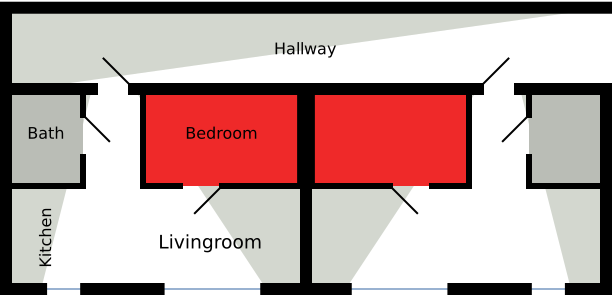
Meet Jane Doe, Joe’s next door neighbor. Joe and Jane’s daily
routines are vastly different, so they almost never meet each other in
the hall. They do have some similarities, though. Like, for example,
using their phones as an alarm clock. Also, the bedrooms of their two
apartments are separated by the same wall. Whatever they put on their
nightstands is pretty much just an arms length apart.
(The rent is about as cheap as this sketch)
Jane got the same notification as Joe, but hesitated at first. She
did not install the app until after midnight. Nevertheless, the two
phones spent most of that night well within a 2m radius of each other
and without any means of detecting the wall in between.
Joe might as well have been sleeping with Jane instead of Suzie, as far
as the apps are concerned (just one of the many reasons, why privacy by design is a must).
Jane is a biology teacher, teaching a graduation class. Most of her
students own (much to her dismay) a smartphone and today is an important
exam. Jane, knowing a thing or two about viri, takes reasonable
precautions, like wearing a mask and keeping the windows open. However,
she can’t prevent her tracer app from picking up a few dozen contacts
that day. Of course, this is mutual. Whoever she logs as a contact, logs
her as well. Later that day, her students will also log their families.
Assessment Bluetooth contact tracing is hyped as a silver bullet, an alternative to social distancing. It is neither!
It merely replaces an effective countermeasure with an inferior one in
order to permit risky behavior again. In other words, for policy
makers, the availability of Bluetooth contact tracing is an excuse to
raise the threshold for what is deemed “dangerous” without actually
lowering the risk.
Day 3
It’s John Smith’s day off. He’s a long-distance trucker and parent of
one of Jane Doe’s front row students. Their father-daughter day starts
off with the two logging a contact for each other.
Assessment At first it may
seem as if Jane Doe and John Smith are just two different names for the
same function, but they aren’t. She’s a multiplier (spreads to many people locally), he is a bridge (spreads to few people, but across barriers).
Day 4
John starts a new tour. He picks up cargo early in the morning and
drops it off in another town after sunset. Since it is too late already
to drive back home, he stays at a motel for the night. He could have
slept in his truck, but today he is having company. The kind of company
that would make him uninstall the tracing app right away, if it didn’t
guarantee privacy.
Assessment John is not
infected, but part of an alarm chain. He just linked two multipliers in
different communities together. Keep in mind that we are only tracking
contacts as infections, not actual infections!
Day 5
Joe wakes up, feeling a bit under the weather. At first, he brushes
it off, but his condition worsens fast. In the afternoon, he finally
seeks medical attention which includes a SARS-CoV-2 smear test.
Assessment Any manual action
that is required between suspicion, confirmation and reporting causes
signalling delay. In this case, the virus gets another day to spread
from anyone, Joe might have infected. This makes all the argument for
automatic alarm forwarding, even if false alarms are to be expected.
Day 6
Joe’s test results are back: positive. He does the
responsible thing and hits the “I am infected” button in his contact
tracing app. Within minutes, the alarm cascades through his contacts and
the contacts of his contacts. Everyone who has directly or indirectly
gotten in touch (pun intended) with him for the last week receives a
message with a simple choice:
Either stay at home for 14 days or pay for a test and stay at home till you have the results.
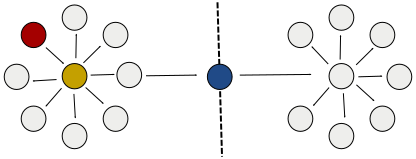
The social graph of Joe (red), Jane (yellow) and John(blue)
Potentially a few hundred people are going to have a really rotten
day. Most of them will have no clue of where they might have caught the
bug (after all, that was the whole point of making a contact tracing
app, wasn’t it?) or if they actually caught it at all, but now they
carry the “infected” status with all the social and legal implications.
Joe would be really unpopular by now if the app did not guarantee privacy.
Assessment An alarm,
especially a false one, raises the question of liability. Is Joe
responsible for having been careless? Is Jane responsible for causing a
false alarm? Is the app maker responsible for the security holes in the
protocols design? Fact is, a lot of people will have to drop everything
in order to get tested and someone will have to foot the bill. False
alarms are a pretty convincing reason to uninstall the app.
Meanwhile in an alternate reality
There are, of course, different versions of the story above. Let’s
explore some alternatives by putting Joe (source), Jane (multiplier) and
John Smith (bridge) in slightly different roles.
Joe, the hacker
What if Joe stayed home the first day (did not get infected), got hold of Jane’s phone and decides to swat her for fun?
Joe, the slacker
What if Joe was not a neighbor of Jane, but one of her students,
desperate to meet a deadline. Could he buy himself an extension by
faking an infection?
Joe, the movie buff
What if Joe had invited Suzie to the movies and turned his phone off before entering the cinema hall?
Joe, the deceived
Plot twist: Joe just caught the flu. Same symptons, different
pathogen. Should he wait for test results (or be tested at all) before
hitting the alarm?
Joe, the unprepared
Joe is single. What if he runs out of food while quarantined? Will he sneak out, leaving his phone at home?
Joe, the kindergarten teacher
What if someone had the idea to reopen kindergarten, thinking the
availability of Bluetooth contact tracing renders social distancing
unnecessary?
Jane, the hypochondriac
What if Jane had an unrelated symptom, quarantined herself without a test and thinks, she gained immunity afterwards.
Jane, the gym instructor
How many contacts would Jane’s phone log, if she left it in the locker room?
John, the secret agent
Are there countries that would benefit from keeping other countries in lockdown? If so, what could be more effective than interlinking as many people as possible, then sending a fake alarm?
101010, the software bug
Is it possible that a piece of software, especially one, that is based on a bad idea and coded in a hurry, might malfunction?
Every sufficiently large community will have multiple Joes, Janes and
Johns. The story above inevitably unfolds, over and over,
time-displaced, in parallel and with numerous variations. Some of the
story lines will intertwine, others won’t. Every variations adds
complexity and requires exception handling.
Privacy aware Bluetooth contact tracing is fragile at best. Even a
tiny amount of malevolence or stupidity can easily send waves through
the entire system, making it completely unreliable. We
are essentially putting our faith in a system that is constantly going
to cry wolf. (Repeated) false alarms have consequences:
People will stop taking alarms serious.
People will uninstall the app.
People will try to circumvent the app (Suzie, for example, simply left her smartphone at home).
Worst of all, however, people will demand the app to be fixed and governments will succumb to the sunk cost fallacy.
Privacy has to go!
The privacy aware approach has three major weakness:
The system is open for trolling.
Any incoming alarm must be treated as the real thing.
A false alarm cannot (efficiently) be cancelled.
Obviously, an anonymous bulletin board will not work in real life, so
the next version of the contact tracing app will have to be backed by a
central authority that knows the identity of every user. Needless to
say that this will, quite rightly, creep people out and result in the
app getting uninstalled.
Installation is mandatory!
Voluntary use of the app builds on trust. Trust builds on privacy.
Privacy cannot be guaranteed. This means, the only way to get the app on
people’s phones is by installing it forcefully and making it unclosable
(i.e. make it part of the operation system).
People who don’t carry a smartphone, or turn it off will eventually
find that they may no longer be permitted to enter supermarkets or use
public transports.
Of course, the app will still not work properly, as people will make
an effort to actively circumvent or even sabotage the system.
No end in sight!
Privacy, schmiracy. Many app proponents are of the opinion that
saving human lives is more important than saving human rights. Of
course, expressing that opinion requires the basic human right of free
speech. So, yeah there’s an interesting discussion starter. Another
interesting and more practical question is: for how long are we going to
suspend the right to privacy?
The world is full of places with poor medical care. Slums, refugee
camps and the like are communities where SARS-CoV-2 can go into hiding
and from where it can be re-imported at any time. The pandemic does not
really end till the virus is completely eradicated. There are just
dormant phases in between outbreaks and those are the ones when we
actually need the contact tracing apps to be active.
So, when can we have our privacy back? The answer is pretty much: never.
Conclusion
Bluetooth contact tracing is a dumb idea. At best, it will not work, at worst, it will lead is into a dystopian future.
Listening to scientists is generally a good idea. Some
Epidemiologist/virologists may suggest contact tracing apps as a
promising approach, but their expertise is in… well,
epidemiology/virology, not computer science. Ask a computer scientist
for their opinion and the answer is: FUCK NO!
Normally, I would not
ask for this, but this time is too important, not to. People need to
understand what they are buying into when lobbying for tracing apps, so:
please do share this article.
The mining company has been ordered by the Federal Court to pay a penalty of $750,000 for contravening its continuous disclosure obligations.
The court found that between December 2012 and January 2013, Rio
Tinto failed to disclose to the ASX that mining assets held by Rio Tinto
Coal Mozambique were no longer economically viable as long-life,
large-scale, tier-one coking coal resources.
“Rio Tinto had obligations to the market to keep it adequately
informed about its mining projects overseas,” said ASIC deputy chair
Sarah Court.
“When Rio Tinto was aware of information that Rio Tinto Coal
Mozambique was no longer economically viable as a long-life,
large-scale, Tier 1 coking coal resource, the market should have been
properly informed in a timely manner,” Ms Court explained.
“The core of ASIC’s case against Rio Tinto was its
continuous disclosure breach and we are pleased the matter has been
finalised with a penalty ordered.”
The orders were made by consent after ASIC and Rio Tinto agreed to resolve the proceedings and filed joint penalty submissions.
The court also ordered, with the consent of the
parties, that ASIC’s claims against two former officers of Rio Tinto,
Tom Albanese and Guy Elliott, be dismissed and with the parties bearing
their own costs.
You just bought the newest hottest
Google Pixel smartphone under the label of Pixel 6 Pro 5G (128GB) for
an ungodly sum ($1299, from JB Hi-Fi) in the colony called Australia,
and you read the tech news from over the seas and there are already
'leaks' about the Pixel 7.
You'd feel kind of ripped off, wouldn't
you?
But that's how business is done where
those corporations charge a premium for their R&D, where you the
customer pays the price for their rather uninspiring new models.
Well, the truth be told, the 'brand
new' smart phone that you're purchasing has already been defined 3
years prior.
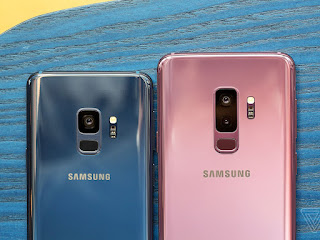
According to gsmarena Samsung's
flagship smartphone the Galaxy S9/S9+ was announced on the 25th of
February 2018, and released in March, where it was available to
retailers in April in Australia.
We've managed to get our hands on the User Manual to the Galaxy S9+ which was
available over 3 years prior to its release, in January of 2015, albeit without
the 'intellectual property' or model's details being revealed.
Australian's, you've been screwed for quite some time!
Freemasons appear in all three tiers of government, that being:
Parliament, Judicature and the Executive.
Therefore the is no 'separation of powers', where the system is NOT 'broken'.
There is a reason why so many people
never see 'justice'.
Corinna Horvath is a PRIME example of
corruption within a tier of government called the Judicature.
Beaten by EIGHT police officers to
within an inch of her life.
Over the course of approx 18 years, she
never really saw 'justice' where she had to go external to obtain a
partial 'remedy'.
But in the case of 'justice' against
you (the serf) the legal business, gets you done and dusted and bent
over within a year, if not, they get an illegitimate sheriff onto you
conning their way to extort the cash from your 'person'.
Even though they give some people their
(small) win, it helps if you're part of the brotherhood, but that
comes at a cost, later on.
Today's economic climate began as a
result of an event that allegedly occurred towards the end of 2019.
As time went on governments (world
wide) enforced sanctions on people, limiting their movements to the
extent of martial law like curfews, with zero tangible models to show
effectiveness of that action.
In relation to Australia, the
mainstream media labelled the general population's action as 'The
Great Resignation' with focus on the action or the effect but not the
cause.
Australian governments, meaning both
federal and state deny responsibilities and shift blame to the other,
when caught out doing some not quite legitimate.
Australia's current Prime Minister,
Scott Morrison, stated that the (federal) government only 'mandated'
a medical service to certain types of employees e.g. in the medical
field.
This goes against the law, that being
Section 51, (xxiii) of the Constitution, but as they say, everything
is legal until you get caught, where in this case Australians must
take Morrison to court.
As a reaction to this unlawful
'mandate' or rather forced action to take a specific medical service,
imposed through employers, the reaction was to quit, hence the coined
term 'The Great Resignation'.
Now keeping the current events in mind,
that being Aussies living under medical apartheid, something which
the mainstream media has never mentioned, reading through Rupert
Murdoch's click-bait, tabloid trash rag, 'news'(.com.au) a headline
pointing to a 'seek'(.com.au) article falsely states that Aussies are
quitting their jobs because of 'burnout'.
The article has a very important field,
that being how long it can take a person to read it, but deliberately
there is no time & date stamp when the article was published, in
reality being put under the deceptive and misleading conduct label.
3 signs you’re at risk of burnout and what to do next
Struggling
to sleep, or having difficulty getting up in the morning? Feeling like
there’s no point to your work, a low mood, or lack of interest in what
you do? It could be burnout that’s at play.
There’s a certain amount of work-related stress in most of our lives,
but this is a normal reaction to factors such as occasional stressful
deadlines or an unusually heavy workload.
But burnout is a more serious type of chronic stress that leaves you
physically and mentally exhausted, says Alex Kingsmill, Life and Career
Coach at Upstairs Coaching. It can cause you to question the work you’re doing, and your ability to perform.
In difficult times where we’re dealing with a lot of changes or extra
demands on us, there could be greater risk of work burnout – so it’s
especially important to look out for.
Here’s how to recognise it, and what you can do to work through it.
Signs you could be suffering burnout
Kingsmill says people experiencing burnout may go through one or more of the following:
Depletion: struggling to get to work, feeling drained, lacking energy and focus, not sleeping well and becoming sick.
Detachment: not enjoying your work anymore, being
critical and cranky with the people around you, feeling pessimistic and
isolating yourself.
Ineffectiveness: feeling apathetic, being less productive, becoming snowed under and missing a sense of satisfaction.
Career burnout usually creeps in quite insidiously; slowly but surely
over time. Kingsmill says the very nature of career burnout can make it
physically and mentally difficult to draw up the energy you need to
address it.
“Over time, you may become increasingly tired and sick, depressed and
anxious, and overwhelmed and unable to effect positive change,” she
says.
Common causes of burnout
Everybody’s experience is different, but there are common causes of burnout at work. Kingsmill says these may include:
Feeling under-resourced
Feeling inadequately qualified or skilled
Juggling work and home demands
Fear you’re not contributing
Unreasonable or unpleasant management or co-workers.
Six ways to get through work burnout
A series of small steps can encourage positive changes and won’t
leave you feeling overwhelmed, Kingsmill says. Here’s how she recommends
dealing with burnout:
Identify the source of your burnout
Work out where your stress is actually coming from, creating a list.
Then identify one thing you can do this week to address the pressure
against one or more of the things you’ve listed. “For example, speak to
management about taking on additional staff, research available training
options, explore the possibility of working from home one day a week,
or collaborate with your manager to identify clear goals and actions for
yourself,” she suggests.
Seek help
Keeping your experiences stuffed inside can make you feel worse and
limit your opportunities for recovery. “Identify a trusted supervisor
and speak to them about what you're experiencing, make use of Employee
Assistance Programs, choose a sympathetic friend and have a chat,”
Kingsmill says. Sometimes simply talking about your feelings can offer
some relief.
Set boundaries
Burnout can be really overwhelming, so as you're getting back on track,
consciously set boundaries and commit to saying ‘no’ to any additional
demands made of you. These tips on how to set boundaries and say no at work could be a good place to start.
Find joy outside of work
It might be a good coffee in the sun, a podcast on a walk, fresh
flowers on your windowsill, or even a regular catch up with a friend.
“Consciously choosing positive emotion will enhance wellbeing and
reinstate a critical sense of autonomy,” Kingsmill says.
Turn off
Screens can drain huge amounts of time and energy. While you're
actively recovering from career burnout, try limiting your screen time
as much as possible.
Take care of your health
Sleeping, eating and exercising well is important for mental and
physical wellbeing. Frustratingly, it can be harder to keep these
healthy habits up in times of stress – but not tending to your health
can compound the original stress and hold you back from recovering.
It’s not unusual to feel overwhelmed by burnout; it can really take
over. But tackling burnout can be a matter of breaking things down into
manageable steps: first sorting out where it’s coming from, then working
through small changes to get you back to a better place.
Remember, you don’t have to handle it alone – there’s support available. BeyondBlue has advice and resources on stress, burnout and mental health in general. Head to Health also offers a collection of resources and services.
Think it could be time for a change? Use our Skills Explorer to see how your skills match up to other possible careers.
Many stories by the mainstream media
are (deliberately?) misreported or with regards to certain topics are
designed to evoke an emotional reaction in the masses that suits a
political agenda.
Telstra, like many other
telecommunications companies and other multi-nationals rely heavily
on cheap (as a result low quality) labour in order to keep profits
high.
In many instances the customers are
unaware of internal failures the low quality cheap labour brings, where
the rectification costs are 4 to 10 times higher than if the job was
done properly by skilled labour in the first place.
At the end of the day, these corporations do NOT wear the costs, where the customer pays for this
in higher costs for the services.
Quite simply put, in this case Telstra
sent out monkeys to do a man's job.
In some circumstances the general population
are aware of the poor decisions corporations make with regards to to
keeping profits high.